Nov 4 2018

A brief summary of SIDS research

I’ve recently read all of the recent guidelines and studies on SIDS and spoken to several NICU doctors and nurses. Below is a summary of everything useful that I learned. Please also see the reference links for the original source material.

Actionable Takeaways

    • Follow AAP 2016 SIDS recommendation / NIH “Safe to Sleep” Campaign (see below material). [1,2,4,5]
    • No hat on baby while sleeping [2, NICU RN during discharge course]
    • Consider providing a pacifier before sleeping. Even if use of pacifier is short, there seems to be some evidence to show that it helps reduce the risk of SIDS. They are OK with leaving pacifier in the sleep area, but I think it’s probably better to remove it after it falls out of the baby’s mouth. [2]
    • Don’t leave babies sleeping in non-CPSC approved sleep surfaces. In particular, do not leave your baby in a car seat, stroller, swing, infant carrier, or sling. Move them to an approved sleeping surface. [4]
    • Maybe consider increasing room ventilation by leaving a window open or using a fan (though the evidence supporting room ventilation as a means to reduce SIDS risk is weak enough that the AAP does not actually include it in their recommendations) [2].
      • Including use of bedroom heating during last sleep [12]
      • Using a fan [13]
      • Well-ventilated room [14]
    • Recommendation from NICU doctors on intervention if witnessing an episode of sleep apnea, baby not breathing, or other Apparent Life Threatening Event (ALTE is something that is frightening to observer usually involving apnea, color change, marked limpness, choking, etc):
      • NICU RN: Give her some time to self recover, like 10 seconds. Then start stimulating her (rubbing her back, changing her position). If she was feeding take away from breast or bottle and change position. Do not shake baby in attempt to awake.


  • NICU Doctor: Same advice as above. On when to start CPR: if skin color changes, or if unresponsive after stimulation. Always start with breaths first, quite often that is enough.


Knowledge Takeaways

  • “Sleep apnea”, where the baby stops breathing while sleeping is common, and the babies that experienced it during studies, did not die from it. In the CHIME study, a longitudinal study conducted in early 2000s involving 1,000+ babies and home monitoring devices, they found 41% of all infants experienced at least one sleep apnea event where the infant stops breathing for at least 20 seconds or a heart rate of <80 bpm for more than 5 seconds (for infants <44 weeks) [9]. 10% of all infants had “extreme events” with breathing that stopped for at least 30 seconds.
  • There has not been any evidence that “sleep apnea” and ALTE (Apparent Life Threatening Events) are precursors to SIDS. [9]
    • “Premature babies are more likely to experience sleep apnea. Highest rates of extreme events were observed among infants who were 43 or less weeks.”
    • “Peak incidence of SIDS generally occurs at older mean Postconceptional ages (PCA) of 44.2, 46.8, and 52.7 weeks for infants born at 24 to 28, 29 to 32, and 37 weeks, respectively. These differences in timing suggest that extreme events are not likely to be immediate precursors to SIDS, although it does not eliminate the possibility that they are markers of vulnerability. and die of SIDS.”
  • There is no solid evidence that SIDS is genetic [2].
  • There is no evidence that the use of home monitoring will SIDS.
  • My thoughts:
    • SIDS is a collection of different causes of death, often times these deaths are completely unexplained. SIDS risk factors are very similar to suffocation. So all the recommendations that Moon, et al provides “were developed to reduce the risk of SIDS and sleep related suffocation, asphyxia, and entrapment among infants”.
    • There’s an unsettling amount that is unknown about SIDS:
      • It might be issues with the brain stem and autonomous functions that regulate breathing or heart rate.
      • It might be, and often is, related to suffocation where loose clothing, loose bedding, rebreathing, and other factors may lead to death.
      • It might be related to overheating and over-bundling. Some experts hypothesize that it stems from some event or development prior to birth (e.g. women who smoke or drink while pregnant have babies with higher Odds Ratios [OR] for SIDS).
      • It sometimes is environmental (sleeping in same room as parents reduces [OR], exposure to smoke).
      • In some studies, incidents of SIDS was initially misdiagnosed, and it ended up being infanticide or other not actual SIDS causes.
    • Because the causes are varied, there needs to be better segmentation by actual underlying cause, to understand and prevent SIDS. Because it occurs relatively infrequently (91 deaths out of 100,000 births or approximately 0.1%), and because SIDS is often unexplained, it is difficult to segment and analyze the constituent causes. Thus, the SIDS recommendations are generally around preventing suffocation, which has undoubtedly been a leading cause.
    • It’s unsettling to know how little is known, and even more unsettling to know that premature babies are at higher risk of SIDS. [15]

References

What I found most helpful in reviewing the literature was going through the references in the AAP 2016 technical report [2].

  1. AAP 2016 SIDS recommendations
  2. AAP 2016 Evidence base for the above recommendations (actual facts and research to support recommendations) 
  3. [old] AAP 2011 SIDS recommendations: https://timedotcom.files.wordpress.com/2014/11/e1341.full.pdf
  4. Article by Rachel Moon (author of above): https://www.healthychildren.org/English/ages-stages/baby/sleep/Pages/A-Parents-Guide-to-Safe-Sleep.aspx
  5. NIH Safe to Sleep two sheeter (their  “Safe to Sleep” campaign is based on American  Academy of Pediatric’s Taskforce on SIDS. Rachel Y. Moon, MD heads the task force
  6. 20 page version of above two pager:
  7. for parents
  8. 20 page version of above two pager, for grandparents
  9. Cardiorespiratory Events Recorded on Home Monitors: Comparison of Healthy Infants With Those at Increased Risk for SIDS
  10. Apnea, Sudden Infant Death Syndrome, and Home Monitoring (AAP Policy Statement) http://pediatrics.aappublications.org/content/111/4/914
  11. https://www.cdc.gov/sids/data.htm
  12. https://www.ncbi.nlm.nih.gov/pubmed/7479275
  13. https://www.ncbi.nlm.nih.gov/pubmed/18838649
  14. https://www.sciencedirect.com/science/article/pii/0277953689900592 (this paper is very old)
  15. http://pediatrics.aappublications.org/content/early/2017/06/01/peds.2016-3334 ; https://news.rutgers.edu/news/premature-infants-greater-risk-sids/20170625; https://www.webmd.com/parenting/baby/news/20060207/longer-sids-risk-premature-babies#1

Nov 3 2018

One of the hardest parts of CPR training

I’ve recently gotten CPR certified, and also even more recently took an infant-specific CPR class. One of the hardest parts of CPR training is getting the correct chest compression pace. Instructors use to say do chest compressions to the beat of Bee Gee’s Staying Alive, which is roughly 100 beats per minute, fairly close to the ideal chest compression per minute pace. However, this is not the correct pace for infants, where pacing should be even faster (somewhere between 100-120, often recommended to be 110). Also, unless you regularly listening to Staying Alive, you probably will misremember the beat. Which is why a fairly inexpensive digital portable metronome is a nice training tool. This one on Amazon sells for less than $10, and remembers the last BPM set (so you could leave it at 110, or whatever bpm of your choosing).


Sep 19 2018

Tips for generating and screening ideas from Facebook, IDEO, Google, and others

The below is the first chapter of a paper I’m writing as part of my Managing Innovation class at Harvard Business School. The paper is a collection of Product Management best practices from tech companies such as Amazon, Google, IDEO, and Microsoft. It also brings in best practices from non-tech companies such as McKinsey and Target that I thought would be useful. This first chapter is specifically on idea generation and screening.

Huge thanks to my classmates Abhinav Agrawal (@agrawal667), Stephanie Christofides (@schristofides), Amit Garg (LI), Kishan Madamala (@kishan7), Minal Mehta (@mili2), and Arjun Ohri (LI) who made this paper possible. Thanks  for putting up with my interviews!

What do I mean by idea generation and screening?

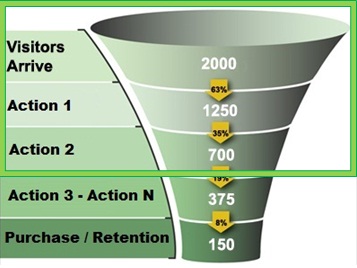
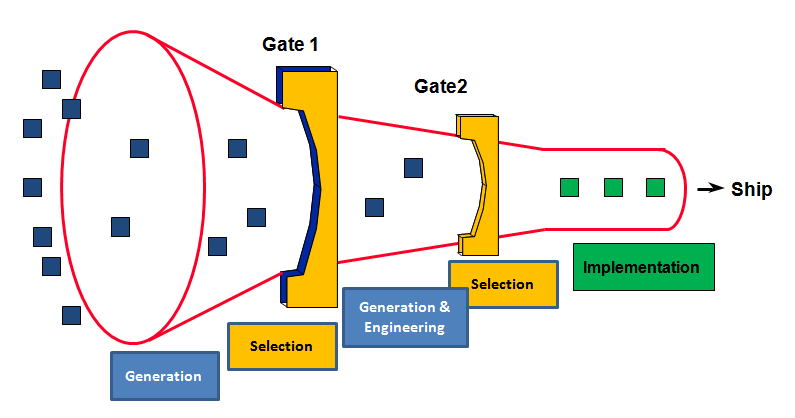
Our first year curriculum introduces the funnel as a metaphor to think about an organization’s innovation system (like any business school, we’re big fans of funnels and 2×2’s):

(Illustration from Professor Roy Shapiro’s TOM wrap-up slides)

In any organization, numerous new ideas are generated and then screened with a select few implemented and shipped as products or services. This section of the paper is about how companies 1) widen the mouth of their funnel (generating more ideas) and 2) how companies screen ideas as they pass through the funnel.

Idea Generation and Screening Tips

Name: Hackathon
Source: Facebook
Takeaway: Consider hosting all-night coding sessions as a way to quickly screen a backlog of ideas.

Every few months, Facebook hosts an all-night Hackathon, where employees stay on campus and pull an all-nighter building prototypes. Facebook keeps a backlog of promising ideas generated by employees and submitted by users at hackathon-ideas@facebook.com. Project ideas are presented at the beginning of the night, teams (all with fun or goofy team names) are formed to work on each project with the goal of having a prototype that can actually be used and tested in the morning. All employees, even non-engineering related, are encouraged to stay the night. Employees are fueled by an unending supply of Red Bull, burgers, Chinese food, and IHOP. Hackathons have generated an incredible array of Facebook features including its internationalization platform, AJAX-ed wall posts, and type-ahead search functionality.

Name: Post-it notes and stickers brainstorming
Source: IDEO
Takeaway: Let the “wild ones fly,” but have a controlled process to manage the discussion and screen for ideas.

IDEO’s brainstorming process is fairly well-known and used in many organizations including Google, Microsoft, and McKinsey. The process is broken down into two phases: idea generation and idea screening. The idea generation phase involves a moderator who provides each participant a post-it note pad to write down a short phrase summarizing his or her idea. As participants come up with ideas, the moderator places the post-it notes summarizing each idea on an empty wall or whiteboard. What makes this process successful are the following seven rules:

  1. Defer judgment
  2. Encourage wild ideas
  3. Build on ideas of others
  4. Stay focused on topic
  5. One conversation at a time
  6. Be visual
  7. Go for quantity

The idea screening phase is notably separated from the idea generation phase. This reflects IDEO’s belief that idea screening discourages idea generation, and should not be performed concurrently. To screen for ideas, each participant is given a set of small circular stickers (generally three stickers) to place on the post-it notes that he or she believes is most promising. Participants are allowed to put multiple stickers on a given post-it note or spread out their “sticker votes” across many ideas. It’s important to note that both the ideas generated and the sticker votes are unattributed to any participant. The ideas with the most stickers are the ones selected for prototyping. (Rodriguez)

Name: 20% time
Source: 3M, Google
Takeaway: Build in strategic slack to increase idea generation

3M and Google both allow engineers to dedicate a set percentage of time to pursue a side project that may be completely unrelated to their primary job. At Google, engineers can save up on their 20% time and take an entire month off to pursue their side project. Many successful products have come from this program including scotch-tape, post-it notes, and Google News.

Name: Idea mailing list & screening site
Source: Google
Takeaway: Start an idea mailing list, automate idea tracking and screening.

Google has a mailing list that enables all employees to pitch, discuss, and recruit teams to pursue ideas. Google has a web site that tracks the number of ideas each employee submits, the average rating score, and the “buzz score,” which is based on the amount of discussion generated on the mailing list. These scores serve a good initial screen for ideas, and attempting to achieve a high score serves as a fantastic motivator.

Name: Google’s idea screening process
Source: Google
Takeaway: Always have clear, well known screens in your innovation funnel.

Even in a company that prides itself on “letting its employees run wild”, Google has clear and well-understood screens for the ideas generated through its employees. Google’s idea filtering process involves the following six screens:

1) Rating and buzz scores from idea mailing list and screening site (employees with excellent reputations from previous successes can bypass this)

2) Exec support and funding (funding amounts can be small, often times a five-digit figure)

3) Internal adoption

4) Pre-beta, un-publicized “public experiment”

5) Google Labs: A more formalized, public experiment

6) Beta launch

Name: Double-anonymous idea screening
Source: McKinsey
Takeaway: Anonmize not only the source of feedback, but also the source of ideas to mitigate any organizational biases

McKinsey often conducts anonymous surveys to solicit and evaluate a set of ideas. This poll is anonymous both in the poll participant being anonymous, and the source of the idea being anonymous. This poll is quite effective at surfacing tensions in an organization between senior and middle management that may not arise otherwise out of a misplaced sense of loyalty and reluctance to criticize.

Name: Cross-industry brainstorming
Source: McKinsey
Takeaway: Bring in perspectives and experts from other fields or industries.

McKinsey occasionally brings in experts and clients from other industries who have faced similar functional issues to spur problem solving. Although these individuals do not have domain knowledge, their thoughts and fresh perspective often helps spark creative discussion.

Name: Inspiration scrapbook
Source: Dior
Takeaway: Find, collect, and present ideas to inspire the team’s idea generation.

Every season, John Galliano, the head designer at Dior, creates a scrapbook of things that inspire him for the coming season’s clothing line. This book includes building architecture, colors, or clothing seen during his travels. Designers go off independently to generate ideas and concepts using the book as inspiration. The designers meet together where John Galliano serves as the primary screen, selecting which ideas make it to production.

Name: Cross-company off-site
Source: Microsoft and many others.
Takeaway: Include all stakeholders for idea generation, but use the feature team, or “pigs” in scrum terms, for idea screening.

Assemble feature team and relevant experts across the company for a two-hour block of time. Break participants into subgroups of three or four to generate ideas. Have each subgroup present their ideas to the full group. Employ a moderator to write down all ideas that are discussed on a whiteboard and use the majority of the meeting to generate ideas. Dedicate a small portion of time in the latter half of the meeting to discuss criteria for screening ideas. Screening, however, is left to the feature team owners or scrum “pigs” to make the final call on which ideas to implement.

Name: Running idea board
Source: Microsoft and many others.
Takeaway: Great ideas come at random, odd moments during the day. Have a visible place for people to capture these ideas.

Create an “idea board” where you have a dedicated whiteboard or area placed in a highly trafficked team area. Have the subject of brainstorming clearly written and allow teammates to put up post-it notes of ideas they have during the course of a week or month.

Name: Liquid internal-labor market as screening device
Source: Google and others.
Takeaway: Keep your internal-labor market liquid to allow your line-level employees to screen for poorly conceived or poorly executed ideas

Google and others have incredibly liquid internal labor markets. Employees can quickly and easily move from team to team and project to project.  This acts as an effective screening device for ongoing projects. If employees working on a given idea/project do not believe it will succeed, they are able to quickly abandon it and move elsewhere. This is an interesting means of killing off projects that are unlikely to succeed.


Sep 16 2018

The Drunkard’s Walk and the most counter-intuitive math problem

I don’t think there’s a more counter-intuitive math problem than the Monty Hall problem.

It’s based loosely on the TV show Let’s Make a Deal, but was made popular after a Parade magazine columnist was berated, by literally thousands of Ph.D.s and mathematicians, for her correct answer.

Here’s the problem:

Suppose the contestants on a game show are given the choice of three doors: Behind one door is a car; behind the others, goats. After a contestant picks a door, the host, who knows what’s behind all the doors, opens one of the unchosen doors, which reveals a goat. He then says to the contestant, “Do you want to switch to the other unopened door?”

Is it to the contestant’s advantage to make the switch?

The answer and reasoning for it is best described by Wikipedia here. I think the decision tree diagram explains it most clearly. The most mind-boggling aspect of the answer is that it’s a 2-to-1 advantage!

I completely forgot about this problem until I was reading The Drunkard’s Walk: How Randomness Rules Our Lives written by Leonard Mlodinow, who also co-authored A Briefer History of Time with Stephen Hawking. Mlodinow’s new book contains this and other “real-life” probability and statistics problems (How a mathematician won a small fortune by playing roulette; Use of the Prosecutor’s Fallacy in the O.J. Simpson trial; Why firing Merril Lynch’s CEO for losing on subprime investments doesn’t make sense) interspersed with a surprisingly interesting history of famous mathematicians.

I think it’s a fantastic book to read if you’re on a math kick, but a boring one to read if you’re having one of those days where you just don’t feel like calculating your waiter’s tip in your head.


Sep 15 2018

Things I’ve learned from some of my first cases

It’s been a month and a half since I read my very first case at school (The case study method is the primary pedagogical tool used here, see link for 10min. video of what it’s like in the classroom). Since then, we’ve gone through about five dozen cases. They’ve been on everything from well-known companies & industries: Toyota, Dell, to companies in obscure industries: iron ore shipping, styrene-based cement coating, and finally to the absolutely bizarre: contact lenses for chickens. For each of them (even the contact lenses for chicken one), I’ve attempted to write down one sentence that summarizes the most interesting takeaway I got from the case discussion. Here are some of them (they’re not necessarily related to the primary lesson of the case) :

  • Anytime you hear a statistic such as “1/3 of HBS alumni hold C-level positions”, remember this equally compelling statistic: “1/3 of HBS graduates get fired within the first 10 years of graduating” (statistic derived from HBS class of ’74 data).
  • All leaders need to be able to play different roles (coach,cheerleader,disciplinarian), a good leader knows precisely when and where to play them.
  • Surprisingly, it is actually possible to apply a linear regression in analyzing and shaping the culture of an organization.
  • Accounting is not math, and it certainly is not  black and white. When reviewing any statement keep in mind the parties’ biases. Know that there’s always a trade off between accuracy and precision, and that accounting rules allow for a party’s judgement to come into play. THere’s no right answer, only differences in judgement.
  • Always, always, look through the footnotes of a financial statements. There’s a reason why the footnotes are typically more than 30 pages long.
  • When competing against a low cost/low quality entrant, consider creating a “fighter brand”, a brand which is completely disassociated from your existing brand. This allows you to maintain the brand equity of your premium brand.
  • When creating a marketing strategy, you must take into account your competitors’ likely responses. For example, you may decide not to price low if that puts you at risk of entering a pricing war with a competitor with a significantly stronger balance sheet.
  • When segmenting a market, don’t get stuck only segmenting based on the obvious aspects (basing it on existing products on the market, performance, price, etc.). There may be opportunity in targeting an underserved segment defined by dimensions which are not immediately obvious.
  • Assumptions drive financial models: Never trust an investment banker’s numbers without understanding his or her assumptions.
  • Michael Dell’s true genius is in his financial strategy. Dell is one of the few companies in the world that has managed to create a significantly negative cash conversion cycle (Amazon is another).
  • It’s all about the benjamins. It’s better to evaluate companies based on their free cash flow projections, not their net income projections. Net income can hide hideous increases in net working capital and other bad things.

Sep 12 2018

How an Average American Spends His Time

This week, the Bureau of Labor Statistics released its annual American Time Use Survey. This provides incredibly interesting (and somewhat frightening) data about how we spend our time. For example, here’s a direct quote  from the Bureau’s press release:

Conversely, individuals ages 15 to 19 read for an average of 5 minutes per weekend day while spending 1.0 hour playing games or using a computer for leisure.

The same demographic watches more than two hours of television per day.

After doing some quick math from Table 11, this means that:

In a given weekend, an American teenager will spend more time watching TV than he spends reading leisurely in an entire month.

If you’re interested in checking out the data, you can check out the two links above or:

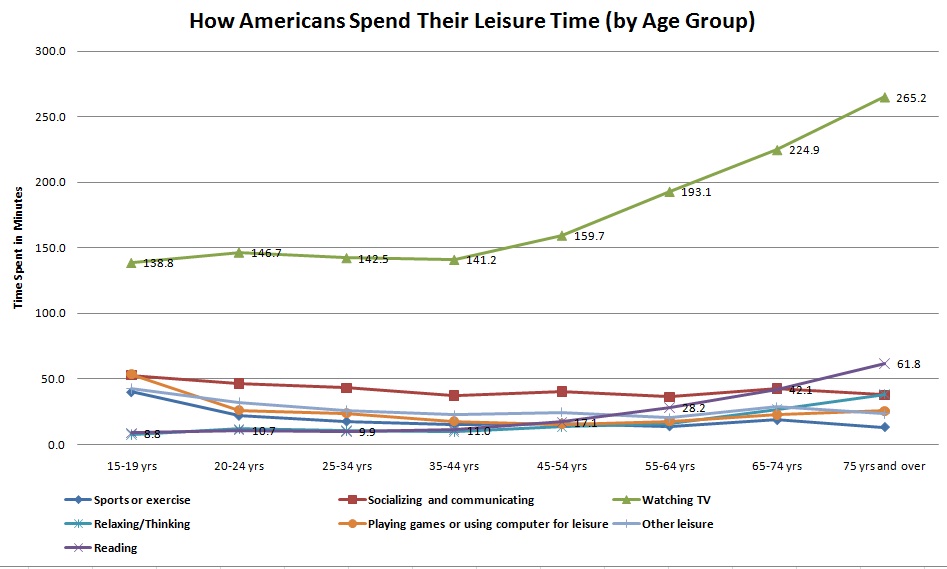
I also threw Table 11, the data about how we spend our leisure time into Excel and played around a bit. Below are two charts I found interesting. What I find most interesting is that the amount of time spent using the computer for leisure is much lower than I would have expected. I’m curious if anyone has a good explanation?

I know that half of US online adults access the internet while watching TV (Forrester 2009), and double counting isn’t allowed in this survey. Or maybe it’s because people are actually spending most of their leisure computer access time during work hours?


Sep 10 2018

Getting New Users to Stick: Deconstructing how the best web sites convert visitors to customers (Part 2 of 2)

This is a follow up blog post to my first post summarizing takeaways on how the best web sites convert first time visitors to new, loyal customers.

Actions are not mutually exclusive

The six actions described in the first post are not mutually exclusive. Often times you may want to present more than one action to a new user on a given page.


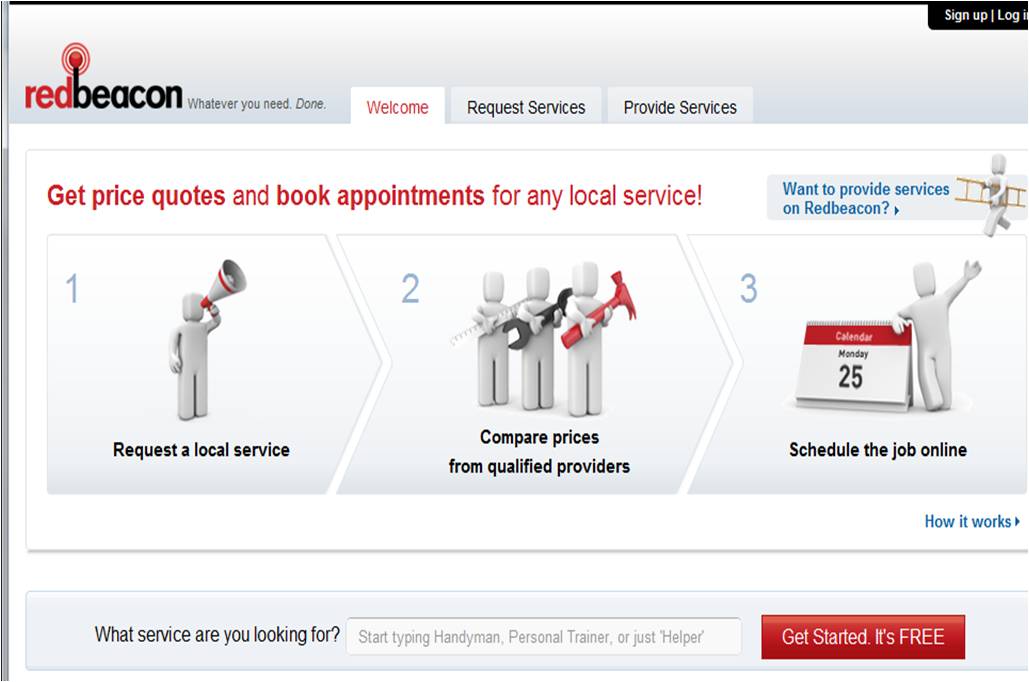
RedBeacon

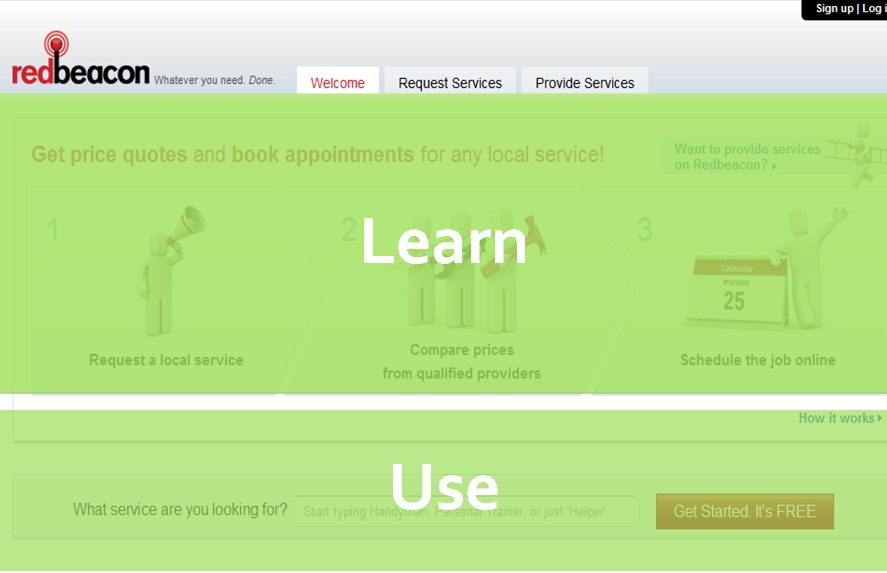
RedBeacon, this year’s TechCrunch50 winner, has recognized that two actions are critical for their users: 1) Learn and 2) Use. They present these two actions, in that order, for all first-time visitors:

ZenDesk

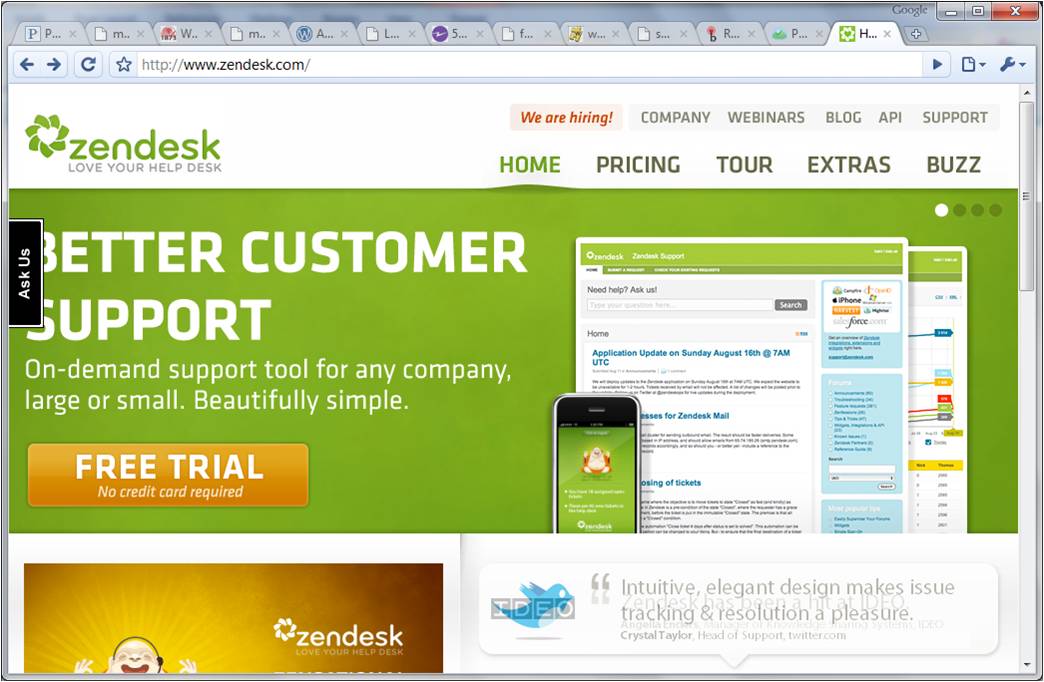
Multiple actions seem particularly prevalent on enterprise sites targeting corporate customers. Trial or Contact actions tend to be present on any first page.

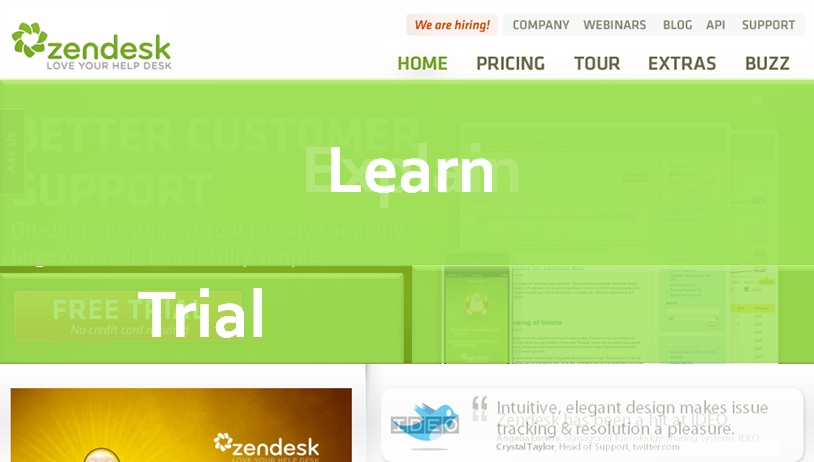
Since many of ZenDesk’s potential customers may be unfamiliar with a SaaS model for helpdesk software, it dedicates considerable screen real estate to Learn, in addition to the Trial that is typical of most enterprise-related sites:

Screen real estate should reflect the importance of the action

RedBeacon

RedBeacon, being a fairly new concept, dedicates roughly 2/3 of their prime screen real estate to Learn, followed by Use for the remaining 1/3.

Dropbox

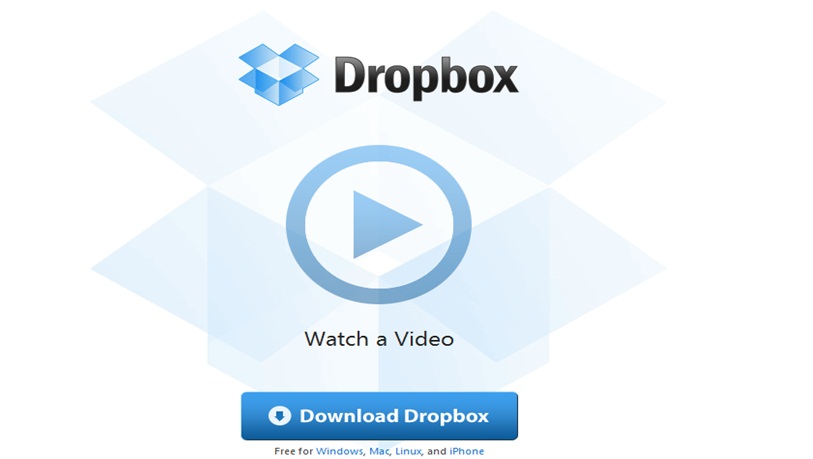
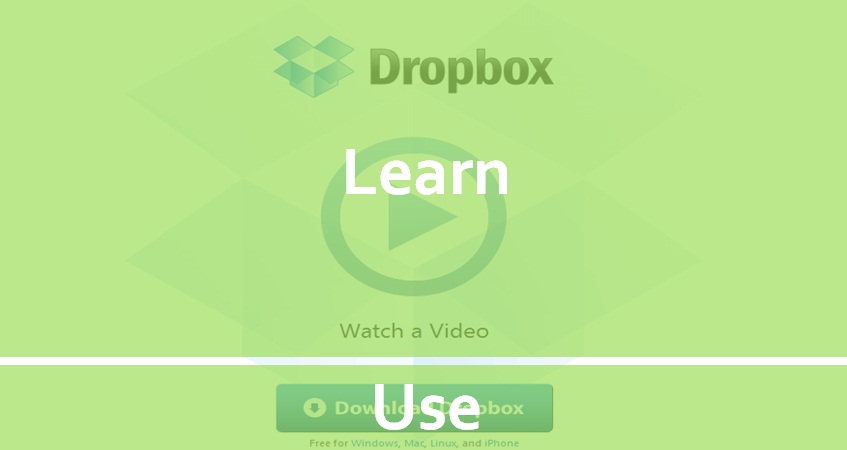
Perhaps the most extreme example I came across was Dropbox. Most visitors wandering onto Dropbox’s site are a) unlikely to fully understand Dropbox’s value proposition and b) hesitant to download and install any out-of-browser software. To deal with these two issues effectively, Dropbox dedicates more than 80% of their prime screen real estate to the Learn action with a fantastic video. The remaining 20% of the screen real estate is dedicated to the Use action.

Order Matters

It’s important to keep in mind that the order in which you present actions matters. For example, though not always the case, most of the time it makes sense for Learn to be presented first, before Trial or Use.

The order may differ across customer segmentations (e.g. Contact may be optimal for one customer segment, while Trial may be optimal for another). For those targeting international users, recognize that the notion of order depends on your user’s cultural perspective. Presenting certain actions from left-to-right might make sense for English-speaking customers, but for Arabic or Hebrew-speaking customers, it likely won’t, since these users read right-to-left.

Combined Takeaways:

Post #1:

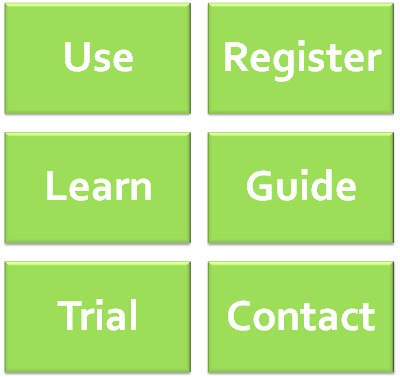
  1. There is a fairly simple taxonomy of user actions: Use, Register, Learn, Guide, Trial, and Contact.
  2. Getting new users to stick involves two difficult things: a) Knowing which of these actions is “sticky” for your users and b) Incentivizing users to perform those actions.
  3. This is highly dependent on the nature of your product and who your users are. For example, “Register” would be ineffective for TheSixtyOne when visitors likely have little patience to register for yet another online radio service.
  4. Don’t think about your web site as a series of pages that visitors see. Think of it as a series of actions you want visitors to take.

Post #2:

  1. Actions are not mutually exclusive. It often times makes sense to present more than one action on a single page.
  2. Screen real estate dedicated to a given action should generally reflect the relative importance you assign to that action.
  3. The order in which actions are presented matters a lot. Make sure you understand the optimal order of actions to get users to stick. The optimal order may change based on your customers’ cultural perspective, or differ across customer segmentations.
  4. When in doubt, monitor and test. Most of the sites listed above collect and analyze extensive metrics on their user’s behavior. The sites listed above are also likely utilizing some form of an A/B testing framework to methodically increase conversion rates along each step in the funnel.


Sep 9 2018

Getting New Users to Stick: Deconstructing how the best sites convert visitors to customers (Part 1 of 2)

I have recently analyzed more than two dozen web sites attempting to understand how the best ones convert first time visitors to new, loyal customers. The following two blog posts summarize my takeaways.

These two posts are only about the early portion of the visitor “funnel”: the first few actions that users take on a given web site.

(Image Credit: Modified from an image originally from webdesignseo.com)

The Six Basic Actions

I analyzed what my colleagues and I subjectively consider the best sites for getting new users to stick. I was surprised to find two things:

  1. All the possible user actions presented on these sites fit neatly into six categories
  2. Most sites tended to focus on only one or two of these actions.

Use

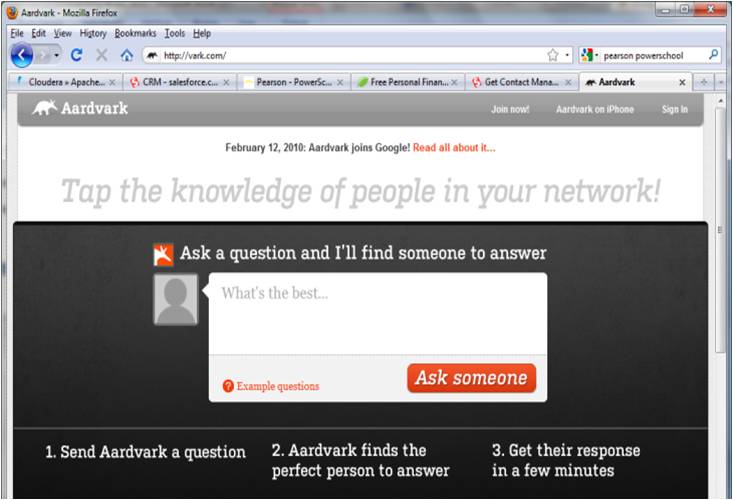
Some sites like Aardvark, Google’s recent acquisition, get users to stick by just getting them to use the full product.

Aardvark

Aardvark simply gets visitors to start using it: No detailed how-to guide. No explanation of how it works. Delayed registration.

It just gets visitors to use it, in this case, by asking a question:

The Sixty One

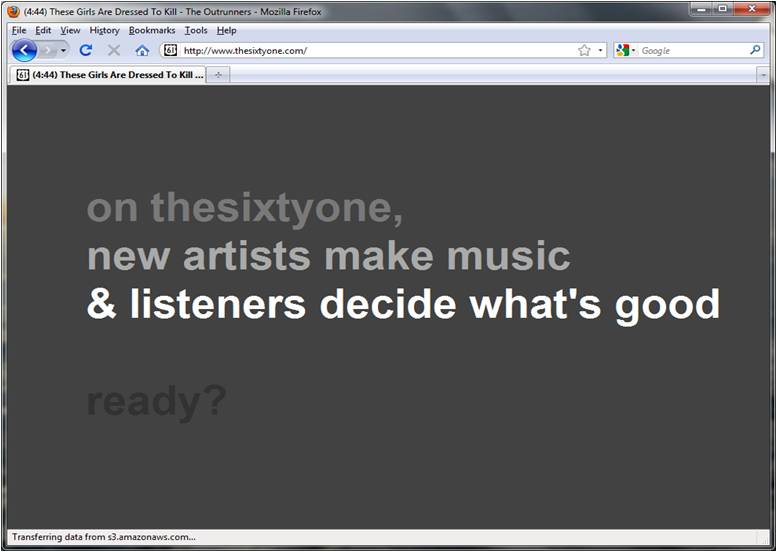
TheSixtyOne.com is perhaps the most impressive example of a great “use” action. This Pandora-like streaming radio site presents a simple, elegant splash screen:

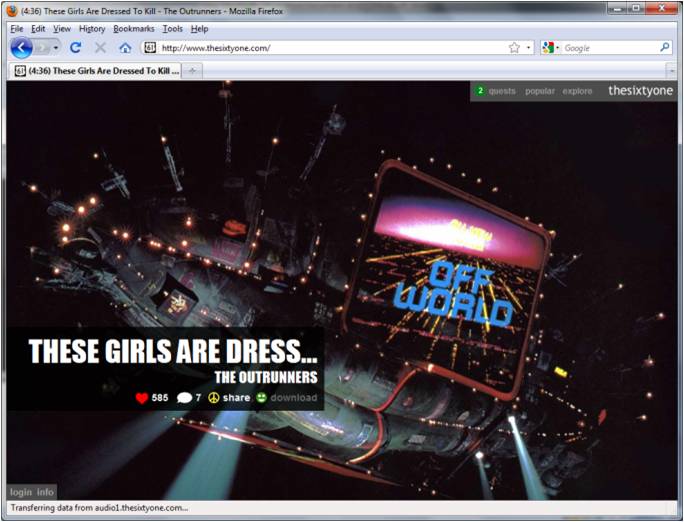
As you’re reading the three lines of text, it caches the audio stream and the beautiful background image so that when you click ‘ready’ it instantly begins playing music.

No sign up. No instructions. Not even a choice for what type of music you like. It just starts playing music, immediately.

Only after using the service, do you discover features which require registration, and more complex features which require explanation.

Register

For other sites, registration is the most crucial barrier in converting visitors to new customers.

Mint

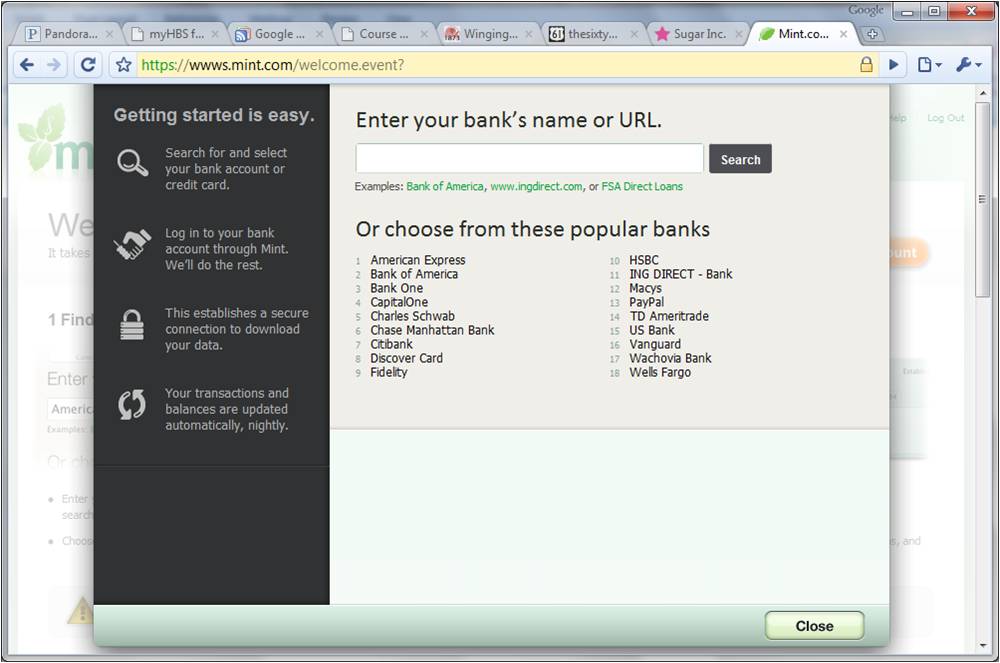
Mint has done an incredible job at making registration painless and easy. Amazingly, with Mint, it’s possible for a user to link all his financial accounts to Mint in under five minutes.

OkCupid

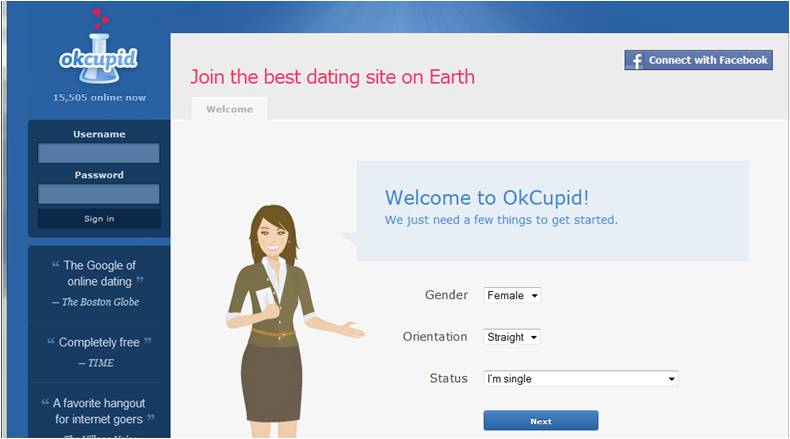
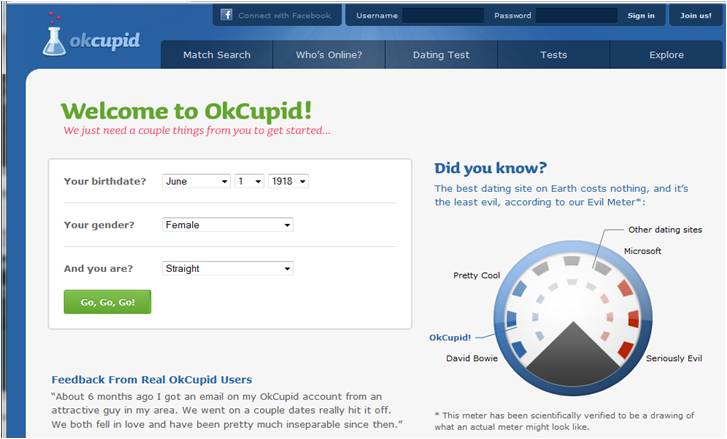
OkCupid limits each registration page to exactly three questions to keep visitors from feeling overwhelmed. Pre-populating answers is another great way to invite visitors to chug through the registration process. It can reduce the number of clicks necessary for a critical demographic of your visitors, in this case, single women. But it can also be psychologically compelling for other users to correct information about them that is incorrect.

Additionally, OkCupid dedicates half of the screen real estate to keeping users entertained with humorous or interesting facts as they register.

Takeaways:

  1. There is a fairly simple taxonomy of user actions: Use, Register, Learn, Guide, Trial, and Contact.
  2. Getting new users to stick involves two difficult things: a) Knowing which of these actions is “sticky” for your users and b) Incentivizing users to perform those actions
  3. This is highly dependent on the nature of your product and who your users are. For example, “Register” would be ineffective for TheSixtyOne when visitors likely have little patience to register for yet another online radio service.
  4. Don’t think about your web site as a series of pages that visitors see. Think of it as a series of actions you want visitors to take.

See Part 2 of this post for more.


Sep 8 2018

Making Pretty Things on the Web

I’ve been spending a lot more time doing front end web things, and found the following to be quite helpful:

Avoiding Helvetica and Arial

Visualization

UI Frameworks


Sep 6 2018

Some light reading for the fall

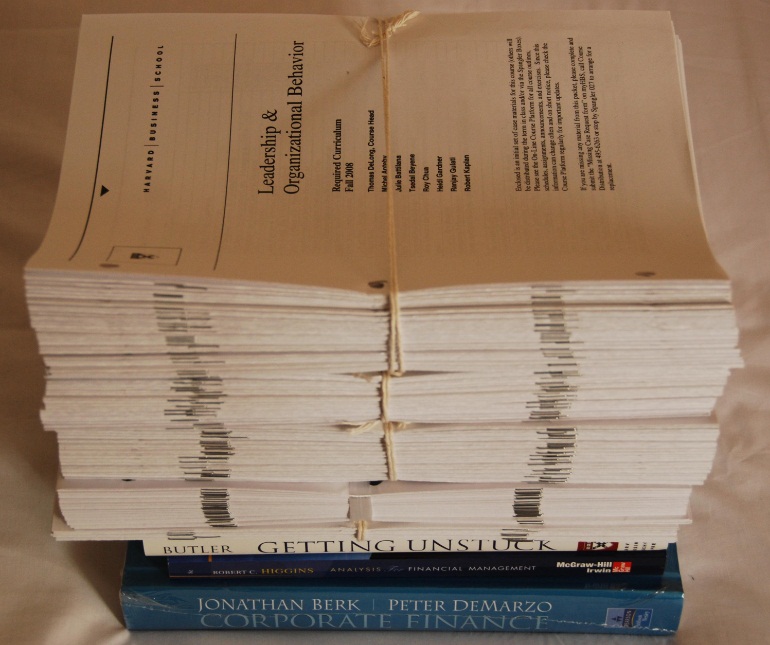
First set of course material for the semester:

Stack of cases


Sep 4 2018

DeBeers: "I will" will become "I do", if you’re lucky?

I saw the below DeBeers ad tagline today and found its message to be confusing:

“Today almost 12,000 American men will ask someone to marry them. Next year, for over 2 million American couples, “I will” will become “I do.”

Assuming proposals per day is consistent throughout the year, this means an abysmally low 46% proposal-to-marriage conversion rate. Unless, I guess, “American couples” excludes American men paired with non-American women. Maybe the conversion rate is higher, and it’s just that DeBeers is capitalizing on a booming mail-order bride industry?

So there might be two messages in this ad:

“Dude, your chances are slim already, don’t go for the dinky ring. Go big and keep your receipt.”

“Dude, your chances are slim. Just in case she says no, why don’t you look at the classifieds at the back of this publication before you return that ring?”

Or maybe the ad isn’t targeted at men, but rather at women, and the message is:

“Don’t be afraid to say no if the diamond is too small. After all, 54% of your peers have said it. Maybe you should dump him and, instead, pick up these gigantic earings for yourself. ”

Congrats to all my close friends who’ve recently made it past that huge hurdle, and are that much closer to turning “I will” into “I do”.


Sep 3 2008

China.

gates of forbidden city

I recently visited China with my parents for the first time during May. I shared this observation in various forms to some and thought it was somewhat worth posting:

Tourist traps galore

My parents booked a chunk of our trip with a tour guide service. Apparently, it’s extremely common for tour guide services to include a series of tourist traps between travel destinations. Ours was no exception. We hit no less than seven such tourist traps. Each sold wares made of jade, copper, tea, ceramic, silk, or life-sized terra cotta warrior replicas.

The tourism industry there has standardized on a sales format:

1. Each begins one hour before lunch with a brief 5-10min introduction from an English speaking representative. The representative summarizes the labor-intensive process involved in producing the one of a kind products that can only be purchased at this special factory. This introduction normally involves walking down a long hallway past large glass windows showcasing live, smilling artisans working diligently in different stages of production.

2. The hallway leads to a very large showroom filled with no less than half-a-dozen English-speaking women in traditional Chinese dress spread out strategically in zone formation across the room making it impossible to casually browse products without being accosted.

3. At this point, the tour guide disappears (I assume to get paid) so that you must browse products within the showroom for a preset amount of time.

4. The tour guide reappears sometime later and leads you to lunch which is generally located in a restaurant that is directly above the showroom.

5. Lunch is served the moment you sit down and includes reasonable quality chinese food, but for some reason ALWAYS includes a dish of poorly fried french fries.

6. Throughout the rest of the tour, street venders sell the same one of a kind products found at the special factory for at least 1/3 as much.

Other commentary

I found the cities in China to be really modern and perhaps more progressive than most cities in the U.S. Consistent pedestrian signals for the visually impaired, public recycling bins, glassy skyscrapers, and what seems like an amazing well-organized response for quake victims.

But underneath that, there are definitely signs that still reflect a somewhat closed state. The government owns all land, so any private land use is acquired through long-term lease—no one seemed to know what will happen when the leases start expiring. They had this three day period of mourning after the quake where they shut off any entertainment related television. Only the government-run CCTV played on all chinese channels. CNN was the only foreign television station allowed. The government also posted a lot of pro-China propaganda-ish advertisements on TV and billboards almost immediately after the quake.